


The modern information society runs on data, screens, and quick decisions. Most of us check our phones within ten minutes of waking up. We trade goods, talk to friends, and run companies using invisible signals sent through the air.
In simple words, we live in a world where creating, sharing, and using data matters more than making steel or growing grain. It changes how we work, how we talk, and how our cities run. Here is a clear look at what this shift means for you right now.
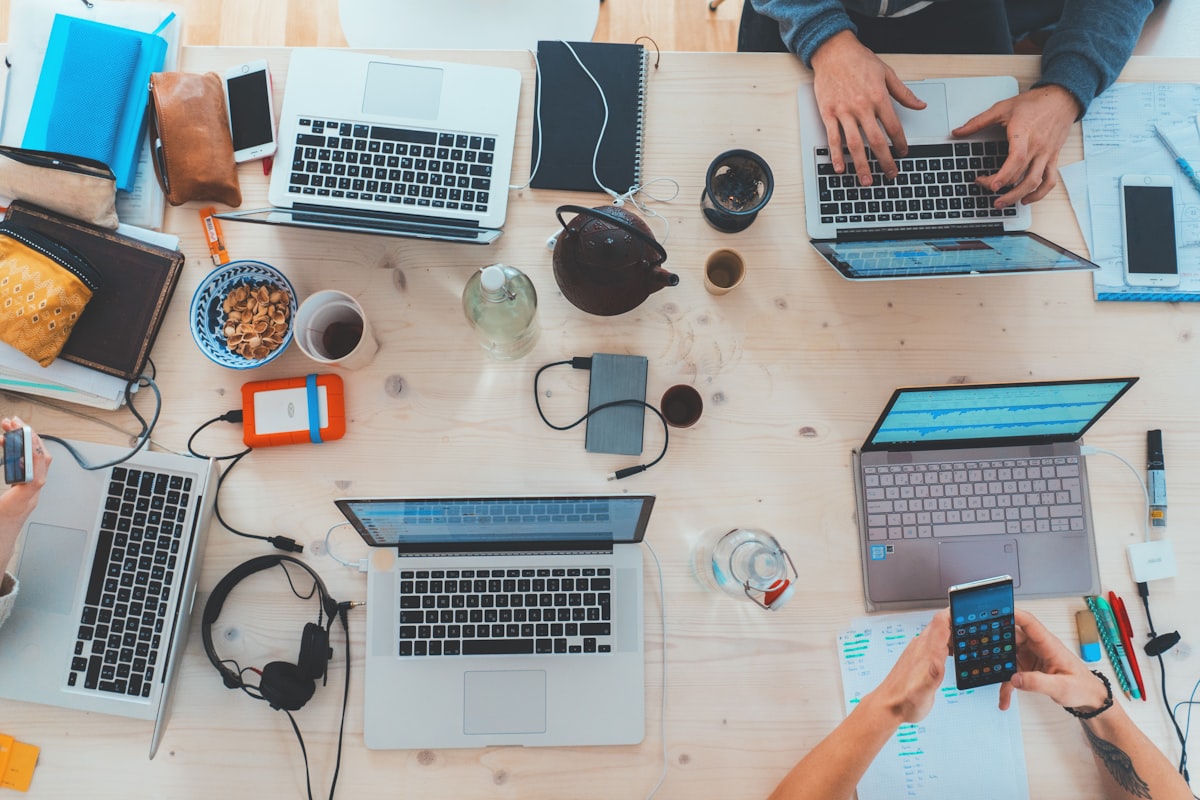
People using connected devices to work and share news together in a modern city office.
What Is an Information Society?
An information society is any community where data drives daily life and economic growth. Decades ago, wealth came from physical factories, coal mines, and heavy machines. Today, wealth comes from software code, medical research, and news feeds.
Think about how you bought your last train ticket or shoes. You probably did not visit a downtown storefront or wait in a long line. You tapped a glass screen, an algorithm checked your bank balance, and a message confirmed the sale in two seconds. That quick loop defines our modern setup.
The concept started growing in the middle of the twentieth century. Sociologists and economists noticed that office workers and engineers began outnumbering factory workers. Now, almost every job touches a computer network in some way.
Even farming depends on data today. A farmer in Iowa uses satellite images and moisture sensors to decide where to drop seeds. A delivery driver in London follows live digital maps to dodge street jams. When information guides the shovel or the steering wheel, that is an information society in action.
The Main Drivers of the Shift
Four big tools pushed us into this new era. Without them, our daily habits would look much like they did fifty years ago.
1. High Speed Internet Development
The internet began as a small university research project. Today, billions of people use it every single day. Fiber cables run across ocean floors, while cell towers bring signals to high mountain towns.
When connection speeds moved from slow dial-up sounds to fast fiber lines, human behavior changed. We stopped buying physical CDs and started streaming music. We stopped buying paper encyclopedias because online tools answer questions instantly. If your hard drive feels slow during these daily tasks, you can learn with CrystalDiskInfo How to Use: Check Your Drive Health Fast to keep your machine running smoothly.
Reliable networks make remote work possible. A graphic designer in Spain can build a brand for a coffee shop in Tokyo without meeting the owner in person. That speed shrank our globe down to a screen.
2. The Rise of Artificial Intelligence
Artificial intelligence is no longer science fiction. It sits quietly inside your email app, sorting out spam before you open your inbox. It helps doctors spot tiny broken bones in X-ray pictures that a tired human eye might miss.
In an information society, artificial intelligence serves as a power tool for the brain. Just as tractors replaced hand plows for muscle work, algorithms handle repetitive mental tasks. They translate foreign languages on the fly, balance power grids during summer heat waves, and answer customer questions around the clock.
Yet, these systems rely on massive piles of text and numbers. Without billions of search queries and photos uploaded by everyday users, smart computer models cannot learn. We feed the machine every time we type or click.
3. Digital Transformation Across Old Industries
Digital transformation sounds like a corporate buzzword, but the reality is practical. It means moving paper files into secure databases and replacing slow steps with fast digital links.
Consider local banks. Twenty years ago, moving money to another country required paper forms, ink stamps, and three business days. Now, you click a button on your phone during lunch, and the money arrives overseas right away. Governments do this too. In many countries, you can renew your driver license online at midnight without stepping into a government office.
For more everyday tech guides and updates, you can check our tech and information news page for practical explainers. These shifts save hours of standing in line, freeing up time for other tasks.
4. Modern Communication Tools
How we speak to each other has shifted completely. Letters gave way to emails, and emails often give way to quick chat messages. Small work teams now chat across group channels instead of gathering in stuffy meeting rooms.
This constant contact brings both speed and stress. You can ask a coworker a question and get a reply in thirty seconds. But you might also feel the pressure to reply to work messages late on a Sunday evening. Instant communication changes our boundaries and our social habits.
How the Information Society Affects Daily Living
It is easy to focus only on gadgets, but the real story is how our lives change at home and in public.
Education is one clear example. In 1990, a student doing a history report had to rely on whatever books were sitting on the local library shelf. Today, a teenager with a basic tablet can read primary historical papers, view museum records, and watch lectures from world experts for free. The door to learning swung wide open.
Healthcare shows another major change. Digital charts let emergency room doctors see your drug allergies right away, even if you are unconscious. Remote video visits let elderly patients talk to specialists without driving an hour in bad weather. For more background on these worldwide trends, read the official summary on Wikipedia to see how different countries track these numbers.
Our shopping habits have shifted just as much. Big fulfillment centers use smart software to track millions of items on tall metal shelves. When you press buy, a robot finds the box, a worker packs it, and a delivery truck brings it to your front door the next afternoon. It feels like magic, but it is purely information tracking.
Real Challenges We Must Face
A society built on data has real weak points. We cannot ignore the bumps in the road just because the tools are convenient.
The Digital Divide
Not everyone enjoys fast internet or a new laptop. Millions of families in rural areas or poor neighborhoods still struggle with weak signals or high hardware costs. When schools assign online homework, kids without home Wi-Fi fall behind. A fair society cannot leave half its people offline.
Privacy and Personal Data
Every free app you download wants something in return. Usually, it wants your personal data. Companies track what you buy, where you walk, and which news stories make you angry. They bundle this information to sell ads. Many people now wonder if they own their phones, or if their phones are watching them.
Information Overload and False News
When anyone can publish anything, bad information travels just as fast as the truth. Fake health cures, altered photos, and misleading headlines spread fast on social networks. People get tired trying to figure out what is real and what is made up. Learning to check sources has become an essential life skill for every citizen.
Frequently Asked Questions
What is the simplest definition of an information society?
It is a society where the creation, sharing, and use of information is the main economic and cultural activity, rather than manual labor or manufacturing goods.
How does artificial intelligence fit into this world?
Artificial intelligence sorts through the flood of data we create. It finds patterns, answers questions, writes simple text, and automates tasks that used to take humans many hours to complete.
Can someone live outside the information society today?
It is very hard. You might avoid using social media, but your bank, your grocery store, your doctor, and your local government all rely on digital data networks to serve you.
What is the biggest risk of relying so much on data?
Security and power failures are major risks. If a banking network goes down or a power grid gets hacked, entire cities can freeze up quickly because we have so few paper backup systems left.
What Comes Next?
The information society will not stop moving forward. Sensors will appear in more household items, cars will talk to traffic lights to cut down on crashes, and tools will get faster. But the technology is only as good as the way we use it. We need to build systems that protect privacy, keep people safe from scams, and ensure that everyone has affordable access to the web. The next chapter belongs to the people who can use this knowledge wisely without losing touch with the physical world around them.


0 Comments